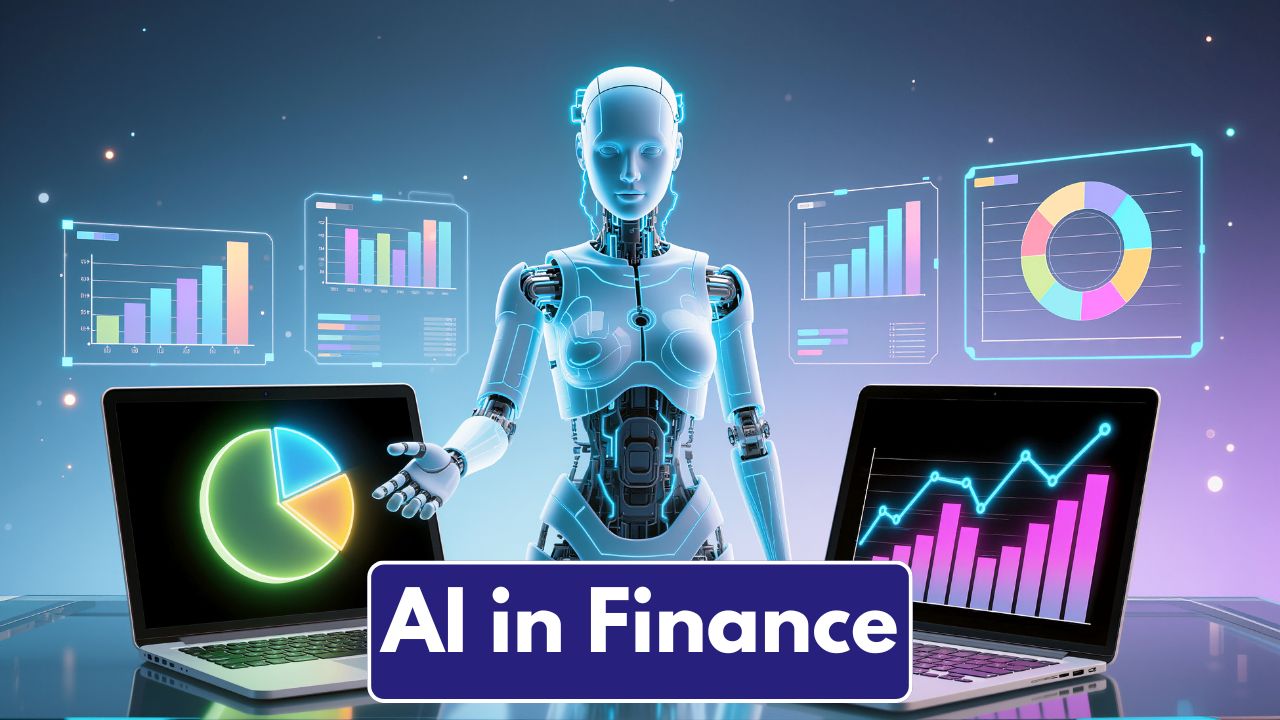
Artificial Intelligence has become increasingly one of the most transformative forces in the global financial system. As is the case with any other financial institution, banks, insurance companies, mutual funds and investment firms are using AI in Finance to make better decisions concerning things related to security and customer experience in an attempt to reduce their operating costs.
What was before alien-sounding as if extraterrestrial forces created by caffeine and code advanced algorithmic trading, personalized banking, fraud detection engines or robo-advisors has now become the new normal for customers of financial services. In this post you can grab details related to How AI is useful in Finance so read this actively.
AI in Finance
Massive amounts of transactions, risk analysis, customer requests and legal obligations are made every day in the financial sector. Traditional systems often have a hard time dealing with such complexity. AI in Finance closes this gap by enabling both decision-making, automation and pattern recognition alongside predictive analytics – and all at a much faster pace than teams of humans. The biggest banks, including JPMorgan Chase, Citibank, HSBC and ICICI have already launched AI-led solutions to support customer service, risk identification and efficiency improvement.
Artificial Intelligence & Banks And Investors
| About | Artificial Intelligence & Banks And Investors |
| Customer Service Applications | One-on-one banking advice, chatbots, virtual assistants and 24/7 assistance. |
| Credit Scoring & Loans | reduced NPAs, alternate credit scoring, faster loan approval and AI powered risk analysis. |
| Robo-Advisors | automated investment planning and customized portfolios according to risk tolerance and objectives. |
| Risk Management | Early warning systems, stress testing, liquidity monitoring, regulatory compliance. |
| Benefits Of AI | Efficiency, cost reduction, accuracy, faster decisions, better customer satisfaction. |
| Future Trends | Hyper-personalization, autonomous finance, generative AI, quantum-powered financial analysis. |
| Category | Technology |
Use Of AI In Various Banking and Investor Sectors
- AI in Personal Banking and Customer Support: Customer engagement is one of the first and most obvious applications of AI in finance. Chatbots and virtual assistants driven by AI enable banks to immediately respond to millions of inquiries. These systems can respond to inquiries concerning loan status, credit card limits, account balances, EMI information, and more. AI not only answers questions but offers customized financial guidance.
- Fraud Detection and Cybersecurity: Digital payments have resulted in a surge of financial fraud and cybercrime. AI is critical to protect institutions and consumers because AI can identify bizarre patterns in an instant. Machine learning models keep filtering transactions in the search of anything unusual, like unexpended expenses, place mixups, odd logins or quick monetary flows. AI systems can automatically halt a transaction or send out a security notice if a risk is identified. AI is used by businesses like PayPal, Visa, and Mastercard to identify thousands of fraudulent transactions per minute.
- AI in Loan Approvals and Credit Scoring: Conventional credit scoring methods mostly rely on basic financial information and historical payback history. These methods can be constrained and slow, though, particularly for first-time borrowers. By examining a greater variety of data, including income patterns, spending patterns, social signals, transaction trends, work history, and even smartphone usage , artificial intelligence transforms credit evaluation. This facilitates quicker and more precise decision-making by lenders.
- Investment Management and Algorithmic Trading: AI has developed into a potent tool for traders and portfolio managers in the financial industry. In order to make trading judgments in a matter of seconds, algorithmic trading systems leverage artificial intelligence to analyze market data, economic indicators, news sentiment, and historical trends. AI is significantly more capable than humans at analyzing thousands of data points at once. AI is used by hedge funds and financial organizations to forecast market trends, maximize investment portfolios, and reduce risk.
- Compliant And Risk Management:The industry where banks operate has numerous regulations that bind it. AI helps with compliance by tracking transactions, identifying when rules are being broken and maintaining audit trails. Risk management In the cases of disasters such as pandemics, recessions or market crashes, AI models also sound early warnings to help organizations take preventive measures. AI can also assist in anti-money-laundering efforts by detecting abnormal funding flows and hidden networks that may indicate criminal activity.
- AI in Wealth Management and Insurance: AI is used in the insurance sector for risk assessment, policy pricing, customer onboarding, and claim processing. Compared to human teams, automated systems handle claims, scan documents, and confirm identities far more quickly. More precise risk assessment by AI algorithms enables insurance companies to establish more equitable rates.
- Innovation in AI and Fintech Growth: Fintech companies have expanded the capabilities of artificial intelligence. Fintech developments heavily rely on artificial intelligence, from fast loans to buy-now-pay-later, from digital KYC to automated trading apps. Machine learning is used by businesses such as Paytm, PhonePe, Cred, and Razorpay for user interaction, credit risk assessment, and fraud detection.
Benefits Of AI In Fintech Industry
AI offers a number of significant benefits:
- Improved efficiency: Human tasks are reduced when repetitive tasks are automated.
- Reduced operational cost: It will reduce the cost as there is less number of manual processes.
- Better precision: Mistakes analyzed and decisions taken, thanks to machine learning.
- Enhanced client services: Personalized interventions and instant support.
- Heightened security: The financial network is protected by AI fraud and risk monitoring.
- Speedy decision-making: Customer service, trades and loan approvals all occur in a fraction of time.
FAQs On AI in Finance
How is AI used by banks?
Banks are deploying AI in risk management, credit scoring, detecting fraud and serving customers.
Algorithmic trading: what is it?
AI-based algorithms are employed in automated trading to generate fast and intelligent automatic trading decisions.
How do you define robo-advisors?
AI programs that are called “robo-advisors” can create and watch investing portfolios by themselves.
How does AI help in fraud detection?
AI recognizes suspicious transaction patterns and shuts off fraud in real time.
How does AI improve bank customer services?
AI chatbots provide personalized financial advice and answer questions instantly.
Can AI make the process of getting a loan even faster?
Yes, AI can easily and rapidly pull up credit data for same day or instant loan approvals.