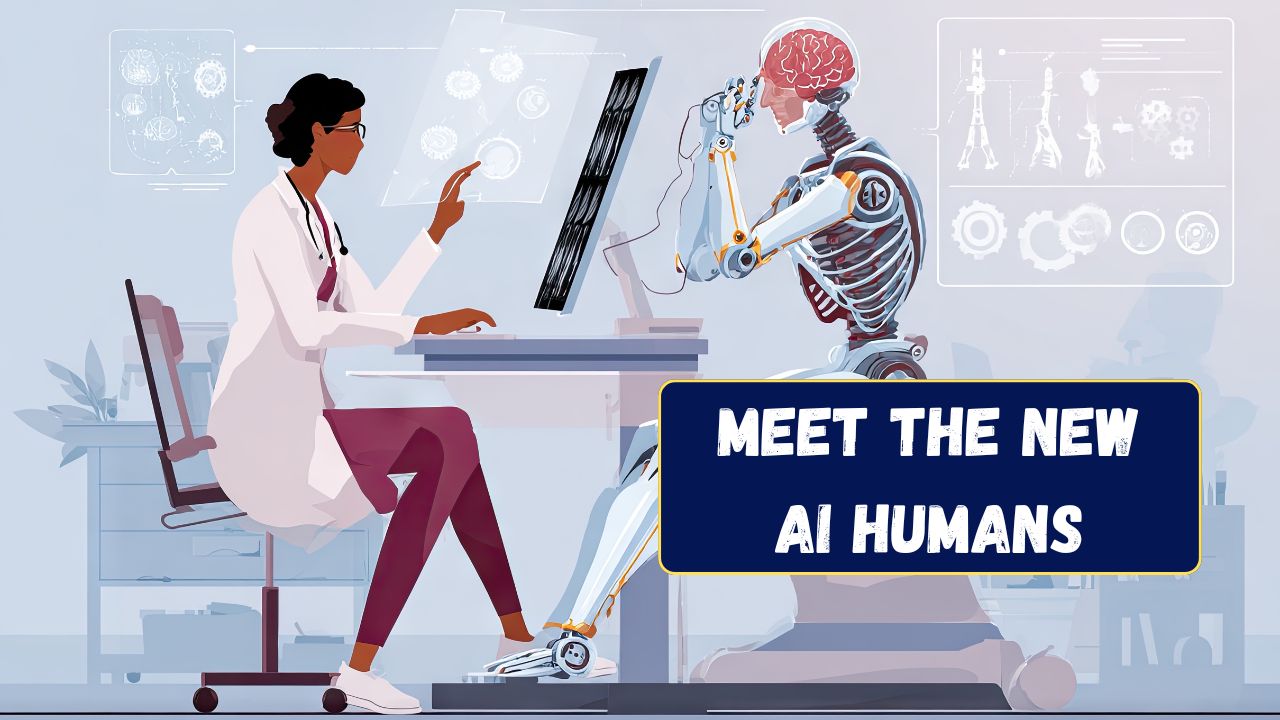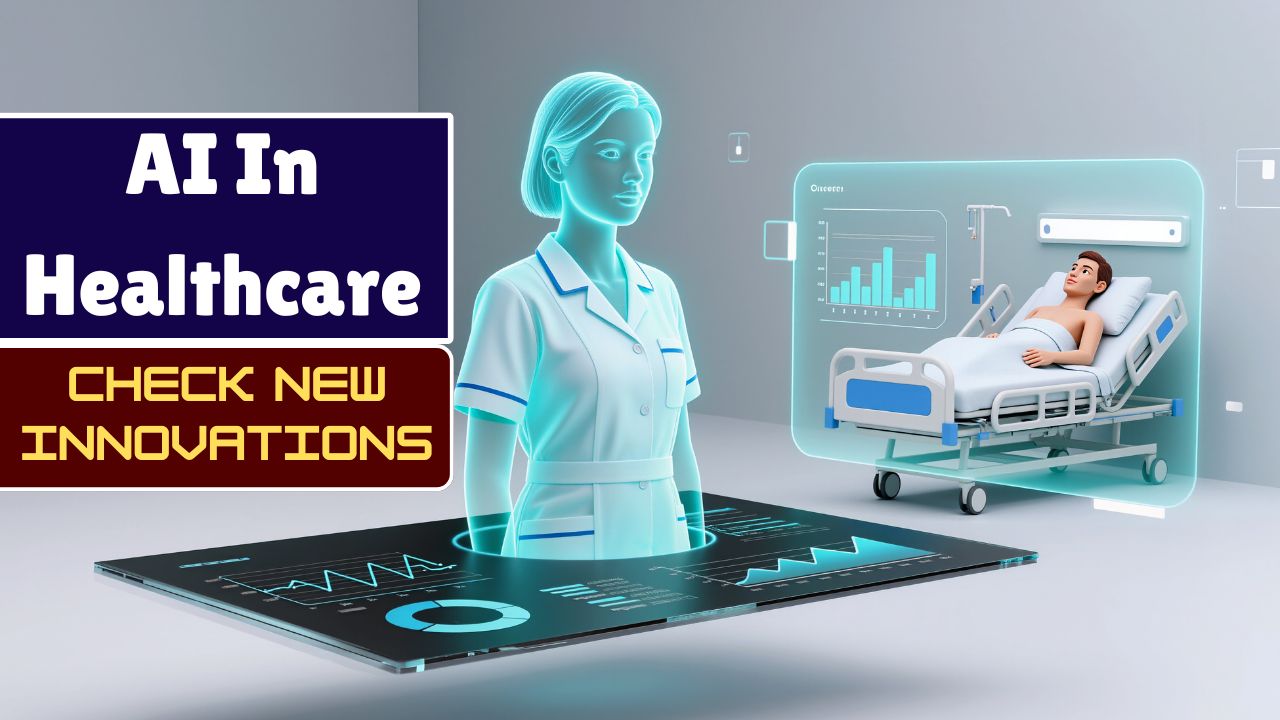
Hospitals are no longer just places where artificial intelligence is science fiction, but reality that’s quickly evolving to streamline workflows, discover drugs, monitor patients and diagnose diseases. Below, we have listed the most important developments done through AI In Healthcare, so that doctors and health-tech entrepreneurs as well as engaged readers can get an idea not only of what’s already working (and for whom), but also what’s in the works and why it matters. Read this article thoroughly to get the least of AI uses in healthcare.
AI In Healthcare
AI In Healthcare is the use of complex algorithms and software to emulate human cognition in medical analysis such as diagnosis, monitoring patient conditions, symptomatology, and wellness. Population health management technologies has significantly contributed to AI’s foray into healthcare. AI chatbots, wearables, monitoring devices remotely help patients; accelerate drug development with prediction tools for protein structure; guide decision making with analytics insights and enable faster and more accurate disease detection via smarter medical imaging for physicians.
Artificial intelligence reduces human error, improves efficiency and allows more personalized care to be delivered by taking over repetitive activities and accurately processing huge volumes of health data. Despite the enormous benefits of AI, its ethical oversight and processing robust data protection include responsible use for safety and security in healthcare.
AI Innovations In Healthcare
| About | AI Innovations In Healthcare |
| Key Application | Predictive analytics, remote monitoring, chatbots, medical imaging and analysis, early-disease detection, drug discovery and pathway design. |
| Benefits | custom treatment plans, faster and more precise diagnosis, less prone to human error, better patient supervision & bigger the efficiency of the hospitals. |
| How It Works | AI processes huge medical data sets, spots patterns and predicts risks, helps doctors interpret images or results, and carries out repetitive tasks. |
| Challenges | Privacy, biased algorithms, clinical validation, regulatory clearance and the need for human oversight. |
| Future | Artificial intelligence (AI)-enabled multimodal personal healthcare delivery and global health is changing the way in which clinical care is delivered. |
| Category | Technology |
Some Important Breakthrough Innovation Through AI In Healthcare
Here I share various points that makes you more clear about which innovations done through AI in Healthcare industry:
Improved Medical Imaging: More Clear and Quicker
As the time is going very advanced so radiologists frequently use deep learning models to identify illness on X-rays, CT Scans and MRI’s. In order for radiologists to examine the most dangerous images first, these algorithms can identify worrisome regions, measure the sizes of lesions, and even prioritize urgent situations. Hundreds of AI/ML enabled imaging equipment have been approved by regulators. Imaging has been the most popular clinical domain for AI adoption because of this combination speed and enhanced detection.
AI-Powered Genomics for Accurate Healthcare
AI has transformed genetic medicine, opening the door for quick developments in precision medicine, which is a major area of future research. It is acknowledged that cancer is a genetic disease.Unfortunately new insights into medicine and treatment have been hampered by our inability to effectively process massively large volumes of genetic information. Overcoming these challenges, AI-driven genomics holds the promise of rapid advances in cancer therapy. Such investigations support tailored therapy and preventitive measures, and contribute to further knowledge about the risk for disease in the individual.
Clinical Documentation and Support Using Generative AI
Electronic health records (EHR) and other technological advancements have enhanced clinical procedures, but they have also brought about issues including documentation loads and clinician burnout. By offering more precise and thorough assistance throughout clinical documentation processes, AI is expected to lessen these constraints in 2025. AI scribes take notes 170% faster than human ones, and AI documentation allows doctors to stop writing or typing out case files entirely, saving 90% of the time they currently spend on administrative work.
Wearable Tech and Telemedicine: Intelligent, Continuous Care
Wearables and home sensors together with AI allow clinicians to track vital signs, detect arrhythmias, and anticipate exacerbations (of COPD, heart failure, diabetes) sooner than under a traditional regimen of episodic visits. When patterns suggest trouble is brewing, machine learning models analyze the data stream and dispatch alerts. While data governance and integration with clinical workflow are still concerns, this shift from reactive to proactive care results in a reduction in hospital readmissions and better chronic illness management.
AI for Designing Clinical Trials And Reusing Drugs
AI discovers indications for re-purposing existing to drugs and helps you design smarter trials (cohort selection, endpoint optimization). This may be a cost-saving and speed-up approach to trials, especially in the case of rare diseases where only a handful of patients are available for enrollment and innovative trial design is needed. When added to high-throughput virtual screens and structure-based models of proteins, these approaches can dramatically compress the timeline from hit discovery to first-in-human studies.
Best practices For Health-Tech Teams and Physicians
In order to gain value and prevent damage, teams should:
- Validate locally: Conduct prospective evaluations in the clinical setting of application, before implementation.
- Keep humans in the loop: Leverage AI for decision support, not autonomous decisions.
- Monitor continuously: Monitor post-deployment performance and retrain responsibly when drift happens.
- Document provenance: Keep audit trails, models versions and explainable labelling on AI facilitated outputs.
FAQs On AI In Healthcare
In what ways can medical professionals benefit from AI?
It enables clinical decision support, pattern recognition and quicker understanding.
Does medical imaging employ AI?
After all, AI demonstrates very accurate illness detection from MRIs, CT scans and X-rays.
Can A.I. detect illnesses before they are serious?
Indeed, with the help of predictive models, AI can find patterns linked to heart trouble, cancer and other conditions early on.
Has AI replaced the physician?
No, AI is an aid to doctors but cannot replace the human touch and clinical judgment.
What are the ways that hospitals can profit from AI?
It reduces admin burden, improves efficiency and automates tasks.
Can AI assist with drug discovery?
In fact, predicting results and examining molecular structures are two of the ways in which AI accelerates drug discovery.